Crime Squad
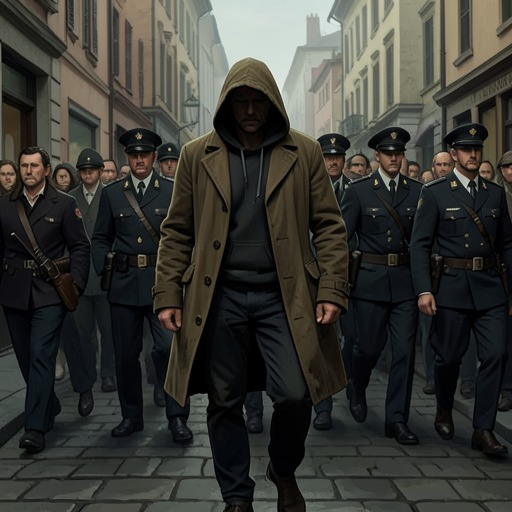
The Shadow of the WindThe Crime Squad is a police body whose power in the novel is defined less by formal procedure than by the violence and manipulation associated with Inspector Fumero. Its officers pursue and intimidate people, while Fumero’s control over investigations and official records allows him to conceal identities and distort the past.
Identity and Methods
The Crime Squad appears as a Barcelona police unit with undercover officers and access to the city’s police headquarters. Its authority is made visible when Fumero presents his police identification, which identifies him as Chief Inspector Francisco Javier Fumero. The badge establishes his official position, but the episodes connected to the unit repeatedly show authority operating through threat and force rather than accountable procedure.
The unit’s undercover officers arrest Don Federico after disrupting his performance at a venue on Calle Escudillers. They take him to the police station in Via Layetana, where Fumero is on duty. The account distinguishes the officers’ initial intervention from what follows: Fumero’s presence turns an arrest that might otherwise have ended in humiliation into a more serious abuse of police power.
Fumero’s Reach
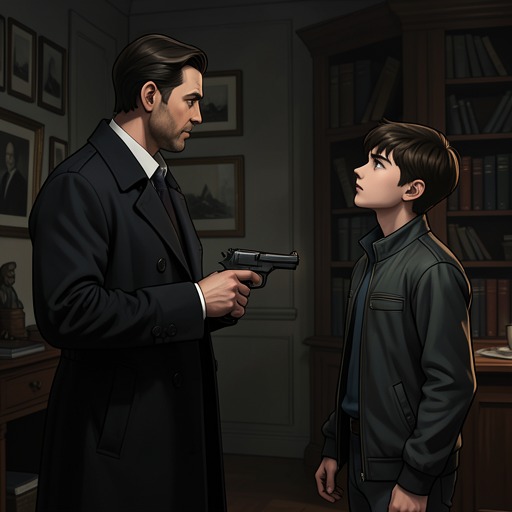
Fumero uses the Crime Squad’s institutional authority to threaten people personally. When confronting Daniel and his companion, he invokes the possibility of taking them to headquarters and subjecting one of them to another interrogation. The threat makes clear that the station is not merely a place of custody: in Fumero’s hands, it becomes leverage for demanding information and intimidating witnesses.
The unit’s reach also extends beyond immediate questioning. Fumero’s interest in Julian Carax and the people investigating Carax’s past links police surveillance to the novel’s network of friendships, correspondence, and concealed histories. Miquel recognizes Fumero’s strategy and sends Julian a warning note; Nuria later understands that Fumero expects Daniel’s investigation to lead him to Julian. Information gathered or anticipated by the police thus shapes what others can safely reveal and when.
Records, Identity, and Consequences
The Crime Squad’s power is especially consequential when the police determine who a dead person is. After Miquel dies, officers bring his body to the morgue with a book and passport identifying him as Julian Fortuny Carax. Don Manuel questions the identification and points out that the man appears to have been dead for at least a day, raising procedural doubts about the police account.
The threat that follows silences that challenge. A policeman tells Don Manuel that the dead man is whoever he says he is, and the morgue worker is left afraid to resist. Fumero later recognizes Miquel’s body but signs the forensic report identifying it as Julian Carax and orders its immediate removal to a common grave on Montjuic. The false identification is therefore not a clerical mistake: it is an official version imposed despite contrary knowledge, with burial helping make that version harder to contest.
Narrative Significance
The Crime Squad connects everyday policing to the novel’s larger struggle over memory and truth. Its officers can arrest and threaten, while Fumero can turn a mistaken or fraudulent identification into an official record. Against this institutional account stand private witnesses and preserved traces: Don Manuel’s recollection of the morgue, the passport and book carried with the body, and the warning passed from Miquel to Julian. The contrast makes the unit significant not simply as a law-enforcement organization, but as a mechanism through which power can control information, endanger those who question it, and shape what later generations believe happened.